Beef Parasites Beef Parasites in Sausage
Most people are fascinated, and probably equally repulsed, by parasites. And information technology may be something you recollect you only need to worry about if y'all go along holiday somewhere exotic. However, increasing globalisation and transportation of nutrient products beyond the world ways we are all increasingly at risk of catching something unwanted from our favourite foods.
Many infections tin be thwarted with proper hygiene – washing fruit and vegetables, including "fix-washed" lettuce, cooking meat properly and fugitive contagion from domestic or wild animals. A joint UN/WHO report said ameliorate farming and global food trade standards could also forbid parasites entering the food chain. Experts take ranked the 24 nigh damaging food-borne parasites according to number of cases, global distribution and wellness affect. Here are the top ten:
one. Taenia solium
T.solium, also known as pork tapeworms, tin mensurate up to 10m when mature and are amid the biggest of these ribbon-like worms to infect humans. They exercise this through larval cysts in undercooked pork that hatch in the stomach and quickly abound into adult worms which inhabit the intestine, feeding on the nutrients y'all consume.
Disease is generally restricted to malnutrition every bit the worm competes with y'all for food – unless you ingest eggs rather than a cyst. These drift effectually the body before forming larval cysts – a condition called cysticercosis – just like they do in the pigs. This can crusade severe problems, peculiarly in the central nervous system (neurocysticercosis) where they tin can crusade epileptic seizures. This is believed to be a principal crusade of epilepsy in many poorer parts of the globe.
2. Echinococcus granulosus
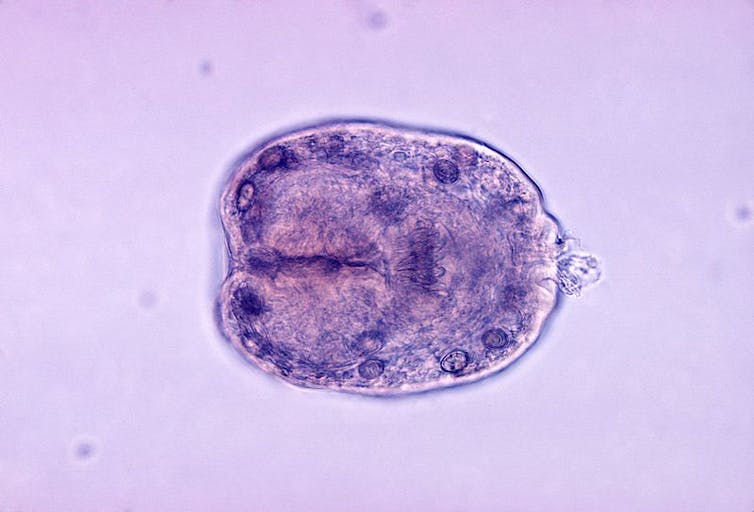
Another tapeworm, only only 3-7mm long, which causes a nasty disease called cystic echinococcosis (CE). The worm has a life cycle that usually cycles between carnivores (usually dogs), and sheep or other livestock. Humans get infected through accidental ingestion of eggs from domestic dog faeces, either through contaminated nutrient products or from direct contact, or contaminated soil. The worm's eggs are tough – they can remain infective for months, even in freezing temperatures.
More than than a million cases of CE occur every year worldwide, mainly in areas where livestock, including camels, come in to close contact with dogs. Later on ingesting eggs, the parasite migrates, primarily to the liver. Slow-growing cysts form and symptoms may not be obvious until several years afterwards. Cysts can contain several litres of fluid and are total of infectious larval stages called protoscoleces. Spontaneous rupture of the cysts can exist very dangerous and lead to fatal shock.
three. Echinococcus multilocularis
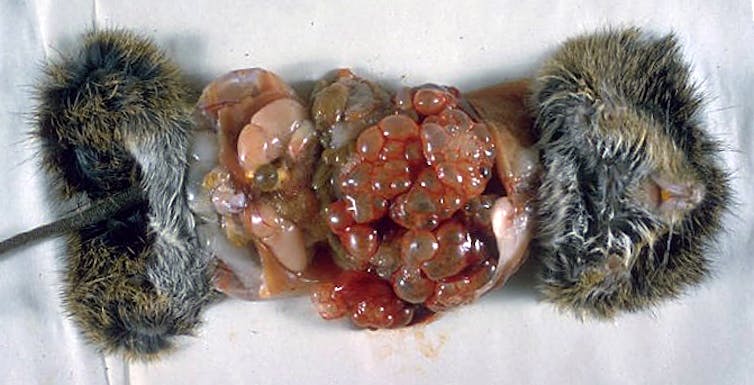
Geographical distribution of this tapeworm is patchy but it's plant in both North America and Europe where prevalence is slowly increasing. Its life cycle normally involves foxes and modest rodents but can happen in domestic dogs and even cats. In humans it causes a disease chosen alveolar echinococcosis, which forms cysts in internal organs. The cysts tin can reproduce and spread like tumours and be fatal if untreated. This infection is considered a run a risk factor for hunters who handle infected fox carcasses and people foraging for berries and mushrooms contaminated by fob faeces.
4. Toxoplasma gondii
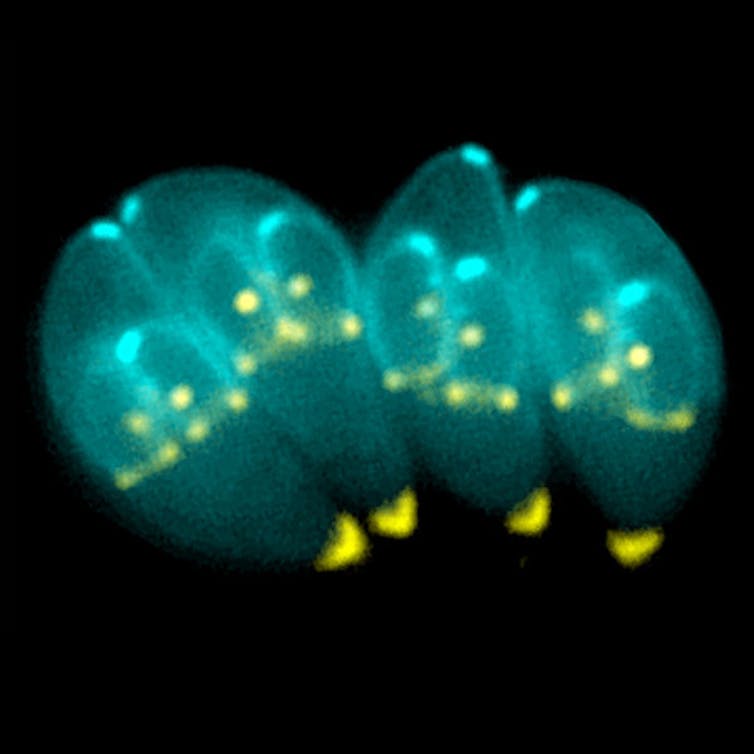
T.gondii is a single-cell parasitic animal (protozoa) that can infect practically all warm-blooded mammals, but its life cycle normally takes identify between cats and rodents. T.gondii is present in nearly countries and is one of the most widespread protozoan parasites affecting humans. Infection charge per unit in humans varies betwixt ten-eighty% of the population in different parts of the earth and the parasite usually stays dormant in the tissues for the lifetime of the host – almost infected people have no symptoms and never know they're infected.
The nearly serious bug arise in pregnant women because the parasite tin can cantankerous the placenta and cause foetal abnormalities or even miscarriage, which is why its advisable for them to avoid cleaning cat litter. Immunosuppressed individuals, such as HIV/AIDS and organ transplant patients, are also at gamble because the parasite can commencement multiplying uncontrollably.
5. Cryptosporidium spp.
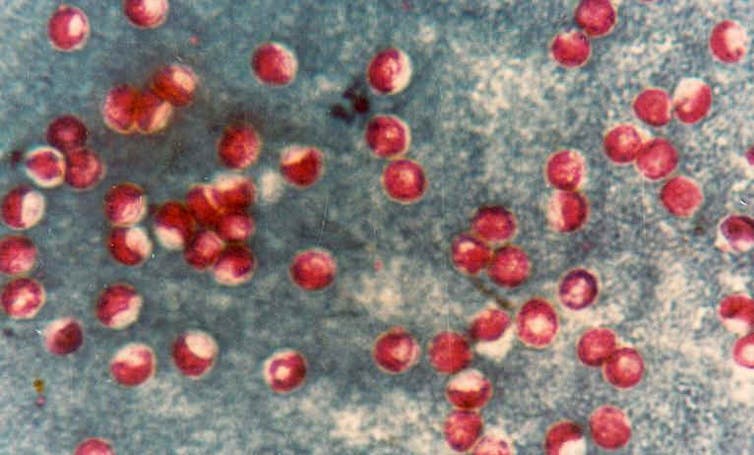
These protozoan parasites are mainly transmitted via contaminated h2o or food washed in contaminated water. Unpasteurised cider and milk, and contaminated shellfish have been implicated in several outbreaks. The parasite is nowadays worldwide, including the UK, and infection is often acquired by foecal contamination of water supplies by infected livestock. In salubrious individuals the disease causes severe watery diarrhoea, which often rights itself. Thorough washing of fresh produce – including "set up washed" lettuces – is recommended.
6. Entamoeba histolytica
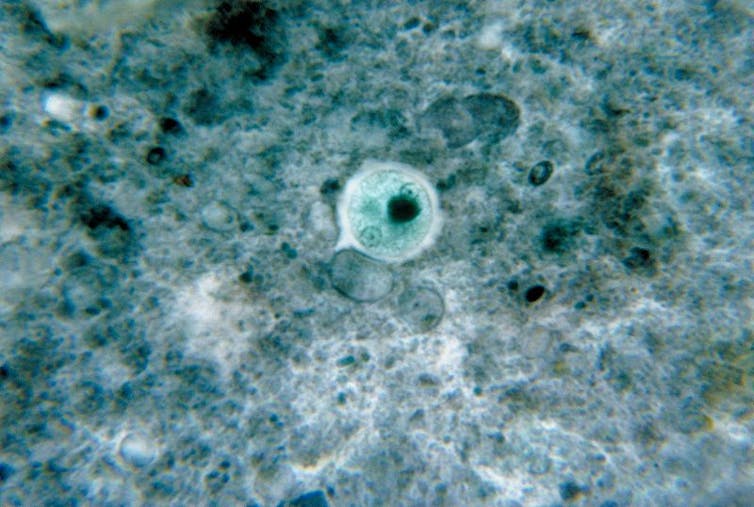
Another protozoan parasite that infects the digestive tract causes amoebic dysentery. The illness is characterised by bloody diarrhoea and abdominal pain that can get life threatening. More than severe problems can occur if the parasite starts spreading from the intestine out into the body, causing abscesses in the liver and other organs.
seven. Trichinella spiralis
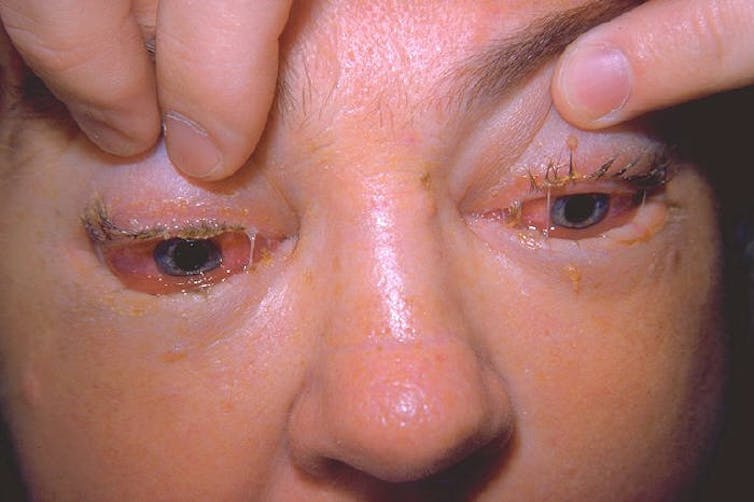
Trichinella spiralis, is an intracellular "pork roundworm" responsible for trichinellosis, a muscle infection caught from eating raw or undercooked pork, or pork products such as smoked sausages. Other sources include game such as wild boar, and even walrus. Infected meat is contaminated with cysts, invisible to the eye, that contain a small-scale larvae. When the meat is digested, these grow into adult worms that mate and produce thousands of new larvae, which travel out into the muscle tissues where they encyst, awaiting the current host to exist eaten.
8. Opisthorchiidae
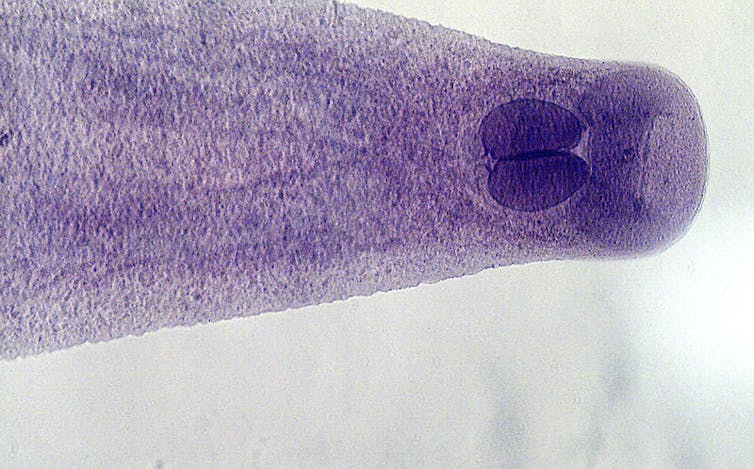
This is a family of flatworms, or flukes, mainly present in southward-eastern asia (though some species are also nowadays in Europe and Russian federation). The infection is contracted through eating raw or undercooked freshwater fish that have themselves been snails infected with larvae. These develop into another type of larvae in fish, and when they are eaten by a mammal (such as a human) they turn into developed worms that make themselves at domicile in the bile duct and gall bladder. It so produces eggs that are excreted in faeces, which hatch to infect new snails when they reach a fresh h2o source.
Infected dogs and cats roaming freely in villages are often significant reservoirs of infection. Chronic long-term Opisthorchis infections are significantly associated with cancer of the liver and bile ducts. Freezing or cooking fish prevents infection – pickling, drying, salting or smoking fish won't.
9. Ascaris spp.
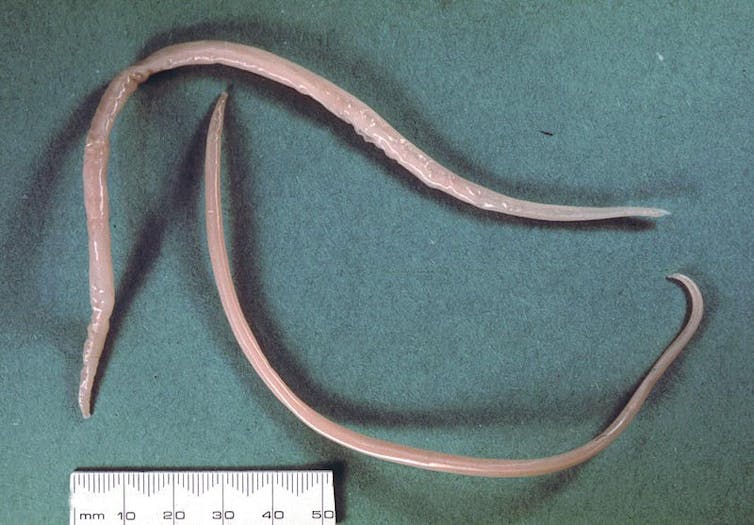
These are the largest of the homo intestinal roundworms (up to 35cm) and with 25% of the world infected, is the about mutual parasite in humans. After ingestion, the eggs hatch into larvae in the intestine before undergoing a remarkable migration: they travel out of the intestine via the blood to the lungs, and so migrate up the airways to the throat, where they go swallowed downwards into the stomach and back to the intestine again, where they finally develop into developed worms.
Each female person worm produces hundreds of thousands of eggs per day which are excreted in the faeces, contaminating the environment and further spreading the affliction. A 2nd species, Ascaris suum, was until recently believed to just infect pigs only is likewise able to infect humans. The level and symptoms of disease depends on the number of worms the individual is infected with, and intestinal blockage can happen considering of the size of the worms.
ten. Trypanosoma cruzi
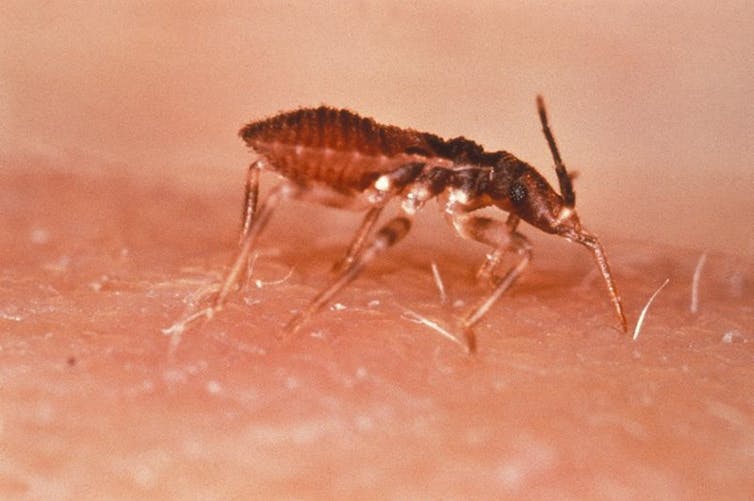
T.cruzi is a protozoan parasite which causes a disease called Chagas illness. The affliction is characterised by slow progression where the parasite infects various cells and organs in the torso, including the middle, over many years, ofttimes with no or just mild symptoms nowadays. Eventually the disease manifests itself through serious, and sometime fatal, cardiac or intestinal problems.
The infection is normally transmitted though contact with the faeces of triatomine beetles ("kissing bugs"), which seek nightly human contact to feed on human claret. When it feeds, the beetle defecates on the host'due south skin. Bug faeces are often then scratched into the bite wound. T.cruzi is on the top 10 list because it was recently discovered that humans tin can be infected past simply ingesting foods contaminated with bug faeces – several outbreaks in recent years were caused past contaminated fruit and sugar pikestaff juices – causing business that it could become a global pathogen.
wolfenbargerentioncesay.blogspot.com
Source: https://theconversation.com/the-top-ten-parasites-that-could-be-lurking-in-your-food-29015
0 Response to "Beef Parasites Beef Parasites in Sausage"
Post a Comment